It is necessary in the UK to have a drone license?
Yes, you must have a drone license if you live in the UK. This are the guidelines you should refer to, to ensure you are abiding by the law.
The CAA has made it mandatory that all the drone owners should get their drones registered before 30th November, 2020.
As UAVs are still very new, the law about their usage is continually developing. So, it is essential that you are completely up-to-date regarding the most recent changes.
So, in the upcoming blog, we have some useful information for you that can help you know about the statutory requirements for obtaining a drone license in the UK.
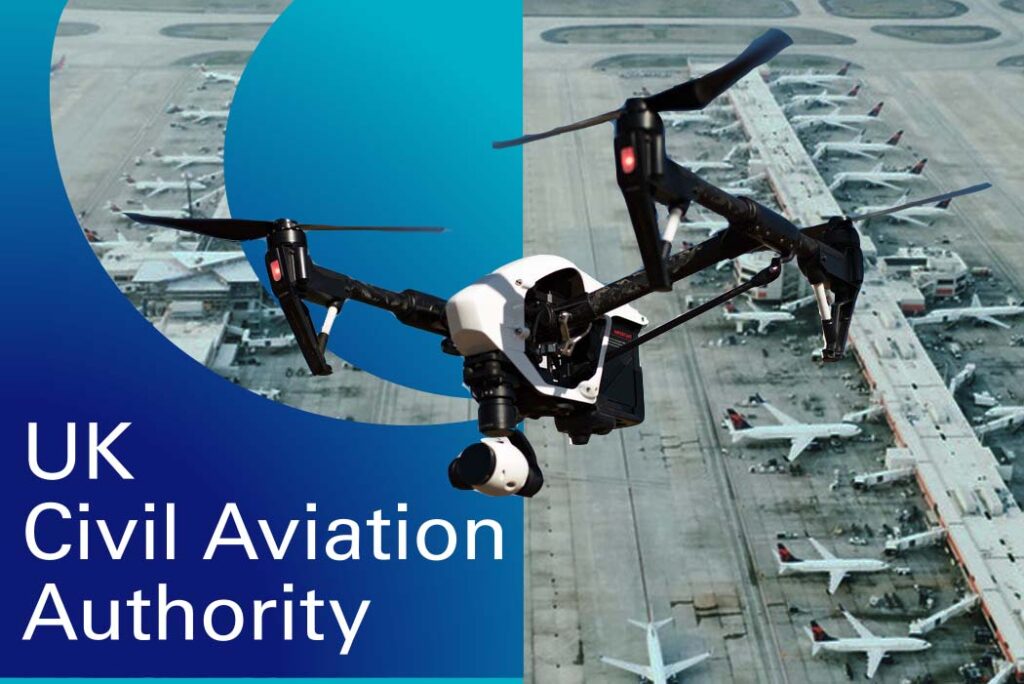
Requirements by CAA for obtaining a drone license in 2020
CAA wants you to be registered for flying a drone in the UK. However, not all the drones require registration. The conditions for registering a drone are:
- If the weight of a drone is between 250g to 20kg.
- If you have plans to use the drone for profit or business purposes.
- You should have an email address that you can check during your application of registration.
- Possess a debit or credit card if you’re registering for an operator ID.
- You should be aware of The Drone and Model Aircraft Code.
If you fulfill the first two points (either with the drone or its usage) then it is a must for you to register your drone, and get a drone license for owning and flying in the UK.
Drone license registration
It is against the law that you fly a drone without registering or passing a test. So, the registration process includes the following:
- You must pass a theory test to get a flyer ID, in order to enable yourself for flying a drone.
- The person who is the owner of the drone or is responsible for the drone, must register to get an operator ID.
You must be at least 18 years old to get an operator ID. However, for obtaining a flyer ID, you must be at least 13 years old.
After getting your operator ID, you are obliged to identify and label all your drones.
You can visit the official website of the Civil Aviation Authority to learn more about the license requirements.
Classification of drones for registration
The latest regulations in 2020 about the drone licensing and registration include the details of drones that need to be registered. Drones are classified on the basis of:
- Maximum Take-Off Mass (MTOM)
- Maximum speed
- Sound power level
- Potential impact energy transference.
The classification of the drones according to the requirements in the new regulations is as follows:
- Class 0 (C0)
- The maximum take-off mass of such drones is less than 250g.
- They must have a maximum speed of 19m/s (approx 42.5mph).
- The maximum operating limit for these drones is about 120m (400ft) from the controlling device.
- Class 1 (C1)
- Drones coming under Class 1 should have either less than 900g maximum take-off mass, or if they collide with a human head, the energy transmission should be less than 80 joules.
- In addition, they are subject to a maximum speed of 19m/s (approx 42.5mph).
- Class 2 (C2)
- These drones must have less than 4kg maximum take-off mass and a design that minimises injury to people.
- They must be equipped with a “low-speed mode” which limits the maximum speed to 3m/s (approx 6.7mph) when selected by the remote pilot.
- Class 3 (C3)
- Drones of this category have less than 25kg maximum take-off mass.
- Class 4 (C4)
- This includes UAVs that do not possess any automation, other than for basic flight stabilisation (and so are more representative of a traditional model aircraft) which are less than 25kg maximum take-off mass.
Drone Training Courses in the UK
If you possess any kind of drone training certificate then it will be easy for you to obtain the license from CAA.
Most of the CAA Recognized Assessment Entities provide you two basic courses for becoming a drone pilot.
After completion you get the following certificates:
- General VLOS Certificate
- Certificate of Competency (C of C)
After you obtain these certificates (General VLOS Certificate being compulsory), you can easily apply for PfCO (Permission for Commercial Operation).
Find out more about the current drone regulations in the UK by clicking here.